Vactrim Light
In today’s office environment, lighting plays a crucial role in employee comfort and productivity. High levels of glare from artificial light can lead to eye strain and distractions. According to Dr. Lily Chen, an expert in workplace ergonomics, "Effective lighting design is essential for enhancing focus and comfort in workspaces." Understanding how to reduce glare in office lighting is vital for creating a conducive work atmosphere.
Many offices still use harsh overhead lights that contribute to glare. This discomfort affects not only individual well-being but also overall productivity. Employees may suffer from headaches or fatigue due to inadequate lighting conditions. Therefore, incorporating softer light sources or using diffusers can be a worthwhile investment.
Implementing adjustable lighting controls can further enhance comfort. Options like task lighting allow employees to customize their workspace. Yet, one must reflect on balancing aesthetics with functionality. Ignoring this aspect may result in inefficient lighting setups that can aggravate the problem. Finding the best solutions requires careful observation and willingness to adapt.
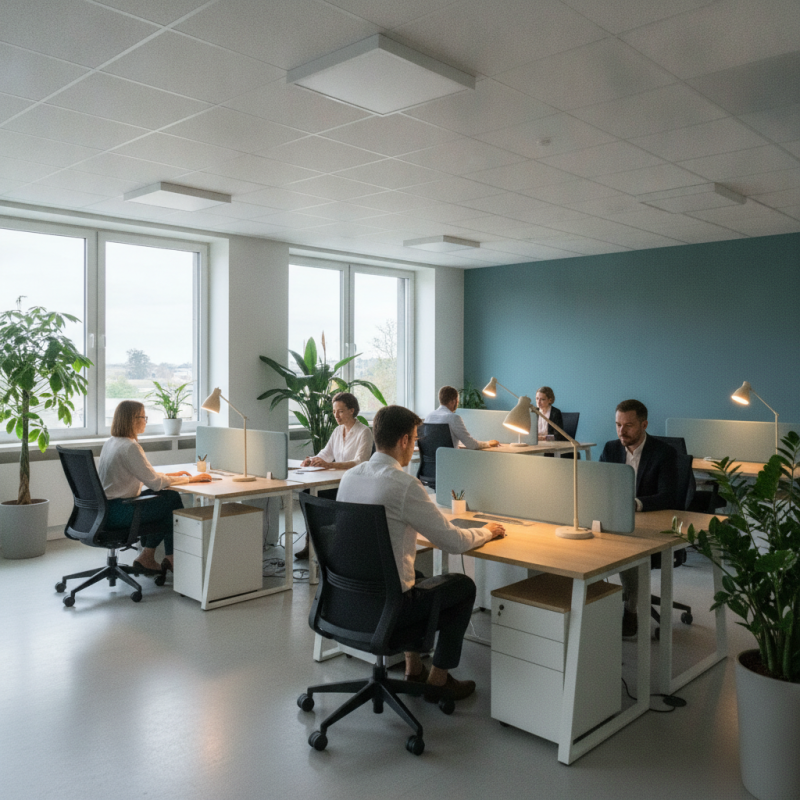
Glare in office environments can lead to discomfort and decreased productivity. Defined as excessive brightness or contrast, glare often results from bright windows, fluorescent lights, or reflective surfaces. According to the Illuminating Engineering Society (IES), glare affects 60 to 70 percent of office workers, and it can lead to eye strain and headaches. Understanding its causes can aid in creating a more comfortable workspace.
Natural light is beneficial, yet it can be a double-edged sword. Direct sunlight may create strong glare on screens. Likewise, harsh artificial lighting can reflect off shiny surfaces. A study by the American Society of Interior Designers (ASID) notes that poor lighting contributes to fatigue and disengagement. Addressing these issues is crucial for employee well-being.
Tips for reducing glare include using blinds or shades to control sunlight. Consider installing anti-glare screens on monitors, which can significantly improve comfort. Additionally, using matte finishes for walls and surfaces helps minimize reflections. Paying attention to lighting placement can also make a significant difference in workspace comfort. Understand that not every solution will work in all situations, and adjustments may be necessary.
Glare in office lighting can significantly affect employee productivity and comfort. Harsh lighting not only causes eye strain but also distracts workers. Employees may struggle to focus on tasks when dealing with excessive brightness. This can lead to frustration and decreased performance over time.
Creating a comfortable workspace involves mindful lighting choices. Adjustable desk lamps can help. They allow employees to control their immediate environment. Window blinds are another useful tool. They can diffuse sunlight during peak hours. However, implementing these solutions could be challenging in shared spaces. Not everyone may agree on preferred lighting levels, causing potential conflicts.
Most offices rely on overhead fluorescent lights, which can be overly intense. Employees may feel pressured to adapt, yet discomfort persists. This situation requires open discussions among team members. Finding a middle ground is important for overall well-being. It’s essential to consider both comfort and productivity when designing office lighting. Balancing these needs can create a more conducive work environment.
Effective office lighting design is crucial for employee comfort and productivity. A study by the Illuminating Engineering Society found that glare is a leading cause of eye strain among office workers. By addressing glare, organizations can improve employee well-being and performance.
One effective strategy is using indirect lighting. This technique minimizes direct exposure to light sources, reducing harsh reflections. Additionally, incorporating adjustable blinds or shades allows employees to control natural light, creating a more comfortable workspace. According to the U.S. Department of Energy, optimizing daylighting can reduce energy costs by up to 25%, while also enhancing comfort.
Another approach involves selecting the right color temperature for lighting. Cooler temperatures, like 4000K, are often more effective in reducing glare than warmer tones. Research suggests that employees in spaces with balanced lighting report 12% higher satisfaction levels. Moreover, utilizing task lighting can focus light where it’s needed most, reducing unnecessary glare from overhead fixtures. Reflections from glossy surfaces can exacerbate glare issues. Choosing matte finishes for surfaces can help diffuse light and create a more pleasant environment.
Selecting appropriate lighting fixtures is essential for reducing glare in office environments. Studies show that approximately 45% of workers report discomfort due to poor lighting. A well-designed lighting system can enhance comfort and productivity. Standard fluorescent fixtures often create harsh shadows and intense glare. Instead, consider using LED fixtures that offer a softer, more diffused light. These fixtures produce less glare while still providing adequate illumination.
Placement plays a critical role in minimizing glare. Fixtures should be positioned strategically to avoid direct line-of-sight with screen displays. Installing indirect lighting can help create an ambient environment. A report by the Lighting Research Center highlights that indirect lighting can reduce glare by up to 70%. Understanding the light distribution of different fixtures is vital. Some fixtures are designed to focus light downward, while others may scatter it.
Innovative designs can also help. Features like lenses and diffusers softens light and reduce harshness. However, not all designs are equally effective. Some may result in uneven lighting or hotspots. Regular evaluation of lighting conditions is necessary. Adjustments may be needed as workstations change. Gathering feedback from employees can guide improvements, creating a more comfortable workspace.
Adaptive lighting solutions can significantly reduce glare in office environments. By implementing smart technologies, workplaces can create a more comfortable atmosphere. These systems adjust light intensity and color temperature based on natural light levels. This adaptability enhances employee focus and reduces eye strain.
Sensors play a crucial role in smart lighting. They measure ambient light and can automatically dim or brighten based on real-time conditions. For example, on bright sunny days, lights can dim to prevent overwhelming glare. However, settings may need frequent adjustments. What works in one area might not be effective in another.
Investing in smart lighting is not just about technology; it requires careful planning. Understanding employee needs is key. Open communication can highlight discomfort areas that need attention. While these solutions offer many benefits, they also require ongoing evaluation. Ensuring a sustainable and effective environment takes patience and effort. The journey toward optimal office lighting is ongoing.
: Glare can lead to eye strain, distraction, and decreased performance among employees.
They allow employees to control lighting, improving their comfort and focus in their workspace.
Different preferences may cause conflicts, making it crucial to find a solution that suits everyone.
Indirect lighting and adjustable blinds can minimize harsh reflections and improve comfort.
Cooler temperatures, like 4000K, significantly reduce glare and enhance employee satisfaction.
Matte finishes diffuse light better and help create a more pleasant and comfortable working environment.
Proper positioning prevents direct light exposure to screens, minimizing glare and enhancing visibility.
Regular evaluations are necessary, as workspace changes may require adjustments to lighting setups.
Employees' opinions can guide improvements, helping to create a workspace that enhances both comfort and productivity.
There could be resistance to change, and not all solutions may meet everyone’s comfort needs effectively.
In modern office environments, understanding glare and its causes is crucial for creating a comfortable workspace. Glare can significantly affect employee productivity and well-being, leading to discomfort and decreased focus. To address this issue, organizations need to implement key strategies on how to reduce glare in office lighting.
These strategies include choosing appropriate lighting fixtures that minimize direct light and employing smart technologies for adaptive lighting solutions. By integrating adjustable lighting systems that can be tailored to individual preferences, employers can enhance comfort and efficiency. Ultimately, a thoughtful lighting design not only improves the work environment but also fosters better employee performance.
